Motherhood Raising Tiny Humans PNG: An Embroidery Review
As a professional digitizer and product reviewer, I approach every new graphic with a specific question: will this actually stitch out well, or is it just a pretty picture? When evaluating the Motherhood Raising Tiny Humans PNG, my focus shifts immediately from screen aesthetics to needle performance. This design falls under the category of Illustrations and Graphics, marketed as a trendy motherhood typography piece. While it is originally formatted for sublimation, its bold layout and humorous sentiment make it a prime candidate for conversion into a machine embroidery design. However, translating a raster graphic into stitches requires careful consideration of stitch density, fabric texture, and end-use application.
First Impressions and Visual Personality
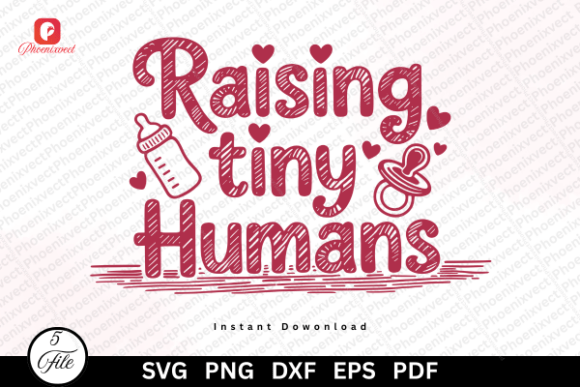
Upon opening the Motherhood Raising Tiny Humans PNG, the first thing that stands out is the balance between playful typography and relatable sentiment. The mood is lighthearted yet modern, avoiding the overly cursive or distressed fonts that often plague mom-life merchandise. For an embroidery project, this clarity is a massive advantage. Clean lines and distinct letterforms are significantly easier to digitize than intricate, grunge-style textures. The visual personality feels boutique-ready, suggesting it would perform exceptionally well on custom apparel and personalized gifts rather than generic craft fair items. As a digital embroidery file source, it offers enough negative space to allow for creative stitch placement without becoming too dense or bulletproof.
Real-World Application: The Sweatshirt Test
To truly judge this asset, I mentally placed it in a real-life production scenario: creating a premium crewneck sweatshirt for an Etsy seller targeting new mothers. Sweatshirt embroidery presents unique challenges due to the fleece backing and stretchy knit face. In this context, the Motherhood Raising Tiny Humans PNG shines because of its potential for mixed-media techniques. Rather than converting the entire graphic into a dense fill stitch, which could distort the garment, I envision this as an applique design or a combination of running stitch outlines with strategic satin stitch accents.
For this specific handmade product, the design’s layout allows for center-chest placement that respects the garment's seams. A customer receiving this finished product should feel the softness of the fabric, not a stiff patch of thread. By utilizing the graphic’s bold shapes, a digitizer can create a breathable design that maintains the cozy aesthetic essential to mom-life wear. This practical adaptability increases the perceived value of the commercial embroidery piece, ensuring buyer engagement through quality construction rather than just novelty.
Navigating Fabric Limitations and Hoop Sizes
While versatile, this design demands respect for material limitations. If you are planning baby embroidery on delicate onesies or lightweight cotton tees, caution is necessary. The original PNG may contain details that are too fine for small hoop sizes. When scaling down for infant wear, tiny lettering can become illegible or cause needle breaks. In these instances, simplifying the design assets is crucial. You might need to remove secondary decorative elements and focus solely on the core "Raising Tiny Humans" text to ensure stitching clarity.
Conversely, when working with textured fabrics like terry cloth tea towels or canvas tote bag designs, the opposite problem arises. The texture can swallow thin lines. Here, the Motherhood Raising Tiny Humans PNG serves as an excellent guide for increasing column widths. A standard satin stitch might disappear into the loops of a towel; widening the stitch or adding a knockdown layer ensures the humor remains readable. Always verify your hoop size before committing to a layout. This graphic likely works best in medium to large hoops for adult apparel, while smaller versions require significant editing to remain professional.
Strategic Placement and Product Value
Where you place this design dictates its success. On curved surfaces like caps, horizontal typography can warp if not properly arched during digitization. The Motherhood Raising Tiny Humans PNG appears linear, meaning it requires modification for hat embroidery to prevent distortion at the edges. For flat items like pillow covers or aprons, the linear format is ideal. Aprons, in particular, benefit from this design because the sturdy twill fabric supports higher stitch counts without puckering.
From a business perspective, using this graphic correctly enhances brand consistency. Customers trust shops that deliver crisp, clean embroidery. If the thread colors contrast poorly against the fabric, or if the stabilizer was insufficient causing registration errors, the humorous message gets lost in technical flaws. High-quality execution transforms a simple PNG into a premium personalized gift. Whether selling digital products or physical goods, the professionalism of the stitch-out directly correlates to repeat business and positive reviews.
Critical Designer Notes for Success
Before loading this design into your machine or listing it in your shop, adhere to these practical guidelines derived from years of embroidery testing:
- Test Stitch Mandatory: Never run this design on a final product without a test sew-out on scrap fabric first. Check how the typography handles corners and curves.
- Stabilizer Selection: Match your stabilizer to the fabric weight. Stretchy knits require cut-away stabilizer to prevent the Motherhood Raising Tiny Humans PNG from distorting after washing. Woven fabrics may suffice with tear-away.
- Thread Color Contrast: Test thread colors against both light and dark backgrounds. White text on cream fabric lacks impact; consider variegated threads or metallic accents to boost visibility and style.
- Licensing Verification: Crucially, confirm the license terms included with the purchase. Just because a file is sold as a sublimation PNG does not automatically grant rights to sell finished embroidered products or redistribute the digital embroidery file. Protect your craft business by reading the fine print.
- Mockup Accuracy: Use printable mockups that reflect actual stitch textures. Flat vector previews mislead customers. Show them what the satin stitch and fill stitch areas will actually look like to manage expectations.
- Detail Inspection: Zoom in to 100% on the PNG. If the edges are pixelated or blurry, your digitizing software will struggle to auto-trace clean paths. Manual redrawing may be necessary for professional results.
Elevating the Finished Product
The Motherhood Raising Tiny Humans PNG is more than just a cute saying; it is a test of your technical skill and artistic judgment. When executed with attention to stitch density, proper hooping, and appropriate fabric pairing, it becomes a standout item in any handmade shop. Whether you are creating holiday embroidery for seasonal markets or year-round custom apparel, the key lies in respecting the translation from pixels to thread. By treating this illustration as a blueprint rather than a finished solution, you ensure that every tote bag, sweatshirt, or baby gift bearing this design meets the high standards your customers expect. Ultimately, successful embroidery is about merging digital artistry with tactile reality, and this design provides the perfect canvas for that intersection.